Living with hypermobility or chronic pain?
We’ll help you build functional foundations and find sustainable solutions—for less pain and a healthier, more resilient life.
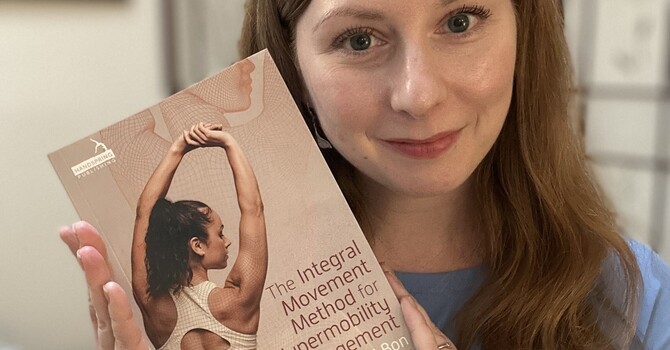
At Mermaid Well®, we understand chronic pain because we've been there too. Dr. Kendra was in physical therapy school when she was diagnosed with Hypermobile Ehlers-Danlos Syndrome (hEDS), a genetic connective tissue disorder. She finally had an answer to years of chronic pain and recurrent injuries. She discovered the water and had freedom to move (pain-free too!) This gave her hope and Dr. Kendra went on to specialize in Aquatic Physical Therapy where she could live out her mermaid dreams! Movement in the water was great, but we don't live in water (even though Dr. Kendra totally wishes we could!) She enrolled in a research study for EDS and did Pilates with Jeannie Di Bon. After a couple months, she started to feel strong in her body again. She started a gluten-free diet for her Celiac disease and endometriosis and started to feel like she had better digestive health. She started using HeartMath® for her Postural Orthostatic Tachycardia Syndrome (POTS) and began to have more clarity, energy, and peace.
Putting the pieces together, it wasn't just about getting stronger physically or eating better, it was about having a strong mind too. Effective treatments for chronic pain must target the mind, body, and your habits!
What started out as personal research and lifestyle experiments turned into creating long-term solutions for her patients! Now, Dr. Kendra offers unique treatment options to meet you where you are and help you on your journey.
Certified in Finding Functional Foundations
Dr. Kendra is certified in Finding Functional Foundations™ (FFF), a specialized physical therapy treatment approach developed by Susan Chalela, PT. This approach uses principles of neuroplasticity to retrain alignment and stability in people with hypermobility.
Move Beyond Flare Mode
Discover Strategies to Align, Strengthen, and Thrive!
What are the Benefits of Finding Functional Foundations?
- Neuroplasticity: FFF™ training provides a comprehensive neuroplasticity-based approach to treating alignment and movement dysfunctions. Retraining neuromotor control addresses the fundamental problem of joint instability.
- Functional: FFF™ shows how a functional foundation creates functional alignment, which creates functional movement and function. FFF™ integrates body awareness and self-assessment directly to function. The FFF™ approach empowers patients to optimize whole-body function.
- Holistic: FFF™ uses a kinesiopathological approach, identifying dysfunctional alignment and movement (kinesiology) that leads to pain and pathology. This holistic strategy helps people learn to use their bodies in ways that optimize function while avoiding pain and injury. This improves long-term management more than addressing individual symptoms using a ‘whack-a-mole’ approach.
- Biofeedback: FFF™ emphasizes biofeedback training to produce neuroplastic changes that allow people to gain confidence in their alignment and movement. Current research shows that incorporating biofeedback into motor control training improves outcomes.
- Evidence based: While the specific FFF™ exercises have not yet been researched, FFF™ is firmly based upon evidence-based practice principles of neuroplasticity, biofeedback, and postural training.
Understanding Hypermobility Spectrum Disorder vs. hEDS
Many people with joint hypermobility fall somewhere on the hypermobility spectrum disorder (HSD) scale before receiving a formal hEDS diagnosis. Whether you have been diagnosed with hypermobility spectrum disorder, hypermobile Ehlers-Danlos syndrome (hEDS), or are still seeking answers, holistic care that addresses connective tissue laxity, nervous system dysregulation, and chronic pain applies across the spectrum. Our approach meets you where you are in your diagnostic journey.
Common hEDS Symptoms We Help Manage
Living with hEDS means managing a constellation of symptoms that go far beyond joint pain. Some of the most common hEDS symptoms our clients come in with include:
- Joint instability, frequent subluxations, and dislocations
- Chronic widespread pain and inflammation
- Fatigue and post-exertional malaise
- Proprioception deficits and poor body awareness
- Autonomic symptoms including dizziness and POTS
- Skin and tissue fragility
- Anxiety and nervous system hypersensitivity
Our holistic treatment approach addresses the root causes rather than managing symptoms in isolation.
Ehlers-Danlos Syndrome Treatment Options We Offer
There is no single fix for Ehlers-Danlos syndrome, which is why our treatment philosophy is integrative by design. Depending on your presentation, care may include physical therapy focused on joint stabilization and neuromuscular retraining, manual therapy calibrated for connective tissue hypermobility, nutritional support targeting collagen and connective tissue health, nervous system regulation through somatic and breathwork techniques, and movement coaching to rebuild strength without causing flares.
We tailor every treatment plan to your specific hypermobility pattern, comorbidities, and goals.
Pricing
Hypermobility (HSD/EDS) Initial Evaluation - $200
Follow-Up Treatment - $150
Hypermobile Hands & Feet (Wellness Group) - $55
The Integral Movement Method (IMM) Virtual Group Session - $55
Testimonials

“I believe this is the new gold standard for physical therapy treatment for hypermobility. The Finding Functional Foundations approach has been transformational for my patients and even for me as a provider living with Hypermobile Ehlers-Danlos Syndrome. This approach gives us a roadmap to develop lasting movement patterns that support function, reduce flare-ups, and promote long-term resilience.” ~Dr. Kendra Lucas

"For the first time in 10 years of being chronically ill, quickly deteriorating within the last 4 years, I was validated without having to fight for it. I could have happy cried for an hour straight solely because of the relief I felt. She made me feel undeniably safe and comfortable. Because of Dr. Lucas, I feel I have a fighting chance at gaining my life and myself back. I trust her with my future, which is, without question, an absolute first for me. I can’t wait to get started." ~Patient
Frequently Asked Questions
Integrative and holistic care is often particularly well-suited for connective tissue disorders because it treats the whole person, not just a joint. EDS affects multiple body systems, so addressing movement, nutrition, nervous system regulation, and mental health together tends to produce better outcomes than isolated treatments.
Standard physical therapy often focuses on a single joint or injury in isolation. Holistic pain care for hypermobility takes a whole-body view, addressing the nervous system, movement patterns, nutrition, and mental health alongside musculoskeletal function. For people with connective tissue disorders, this integrative approach tends to produce more lasting results because it treats the interconnected systems involved.
Yes. Autonomic dysfunction, including POTS, is a common comorbidity with hEDS and hypermobility spectrum disorder. Our care approach accounts for how autonomic symptoms interact with exercise tolerance, pain, and recovery, and we tailor activity and treatment recommendations accordingly.
This varies depending on the severity of symptoms, how long they have been present, and the presence of comorbidities. Most clients notice meaningful changes in pain levels and functional stability within 6 to 12 weeks of consistent, appropriately-dosed treatment. Progress with hypermobility conditions is rarely linear, and we focus on building sustainable capacity over time rather than quick fixes.